Books by grade · Printed book

Grade 2 · Social Studies

22 lessons from the family edition’s 36 weeks, with 17 standards targets.

One of your Grade 2 books
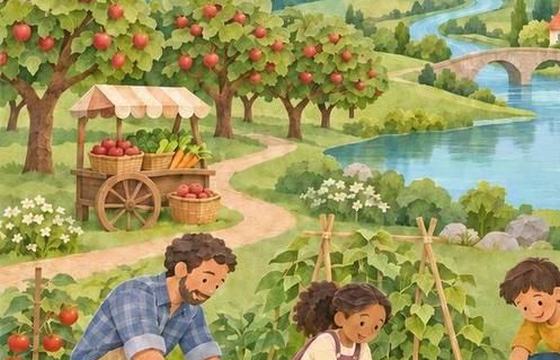
A market cart full of apples stands by a path near an orchard.

Lessons

Each lesson shows its standards. The buttons open the history reading on that week’s page.

Unit 1 · Mapping land and water

  1. Lesson 1 · One place with many locations

    Book p. 12–17

    Family week 1 · Our place in the world

    Standards

    • 2.2I can distinguish exact and relative locations.
    • 2.2.1I can locate community places and geographic features on a simple map.

    History reading for Lesson 1

  2. Lesson 2 · A continent with many neighbors

    Book p. 18–21

    Family week 3 · Across North America

    Standards

    • 2.2.2I can label North America countries, oceans, Great Lakes, major rivers and ranges from memory; identify map elements.

    History reading for Lesson 2

  3. Lesson 3 · Different places with shared needs

    Book p. 22–25

    Family week 4 · California places and living neighbors

    Standards

    • 2.2.4I can compare California rural, urban and suburban land uses.
    • 2.2.1I can locate community places and geographic features on a simple map.

    History reading for Lesson 3

  4. Lesson 4 · Maps help people solve problems

    Book p. 26–30

    Family week 6 · Keep the model path in place

    Standards

    • 2.2I can distinguish exact and relative locations.

    History reading for Lesson 4

Unit 2 · Families and living things

  1. Lesson 5 · A story needs clues

    Book p. 34–38

    Family week 7 · Clues to family stories

    Standards

    • 2.1I can distinguish long ago from the recent past.
    • 2.1.1I can use family interviews, photos, artifacts and documents to learn family history.

    History reading for Lesson 5

  2. Lesson 6 · Before, now and next

    Book p. 39–43

    Family week 8 · Generations and growing

    Standards

    • 2.1.2I can compare the learner’s life with older family members or guardians.
    • 2.1.3I can order significant life events on a timeline or storyboard.

    History reading for Lesson 6

  3. Lesson 7 · A map can hold a family story

    Book p. 44–48

    Family week 12 · A family journey exhibit

    Standards

    • 2.2.3I can map ancestors’ places and explain how the family came to its community.
    • 2.1.1I can use family interviews, photos, artifacts and documents to learn family history.
    • 2.1.2I can compare the learner’s life with older family members or guardians.
    • 2.1.3I can order significant life events on a timeline or storyboard.

    History reading for Lesson 7

Unit 3 · Making and exchanging

  1. Lesson 8 · A basket of choices

    Book p. 52–56

    Family week 13 · What we need and use

    Standards

    • 2.4I can use economic reasoning and explain the learner’s role in the economy.

    History reading for Lesson 8

  2. Lesson 9 · More than a price tag

    Book p. 57–62

    Family week 14 · Buyers, makers and helpers

    Standards

    • 2.4.2I can distinguish consumer buyers from producer sellers.

    History reading for Lesson 9

  3. Lesson 10 · Many routes to a meal

    Book p. 63–66

    Family week 15 · From farm to table

    Standards

    • 2.4.1I can trace food production and the roles of farmers, processors, distributors, weather, land and water.

    History reading for Lesson 10

  4. Lesson 11 · The last six sheets

    Book p. 67–70

    Family week 16 · Choices with limited resources

    Standards

    • 2.4I can use economic reasoning and explain the learner’s role in the economy.
    • 2.4.3I can explain how limited resources affect production and consumption.

    History reading for Lesson 11

  5. Lesson 12 · A market tells a story

    Book p. 71–76

    Family week 18 · Make a small market exhibit

    Standards

    • 2.4I can use economic reasoning and explain the learner’s role in the economy.
    • 2.4.1I can trace food production and the roles of farmers, processors, distributors, weather, land and water.
    • 2.4.2I can distinguish consumer buyers from producer sellers.
    • 2.4.3I can explain how limited resources affect production and consumption.

    History reading for Lesson 12

Unit 4 · Signals and shared decisions

  1. Lesson 13 · Different jobs in government

    Book p. 80–84

    Family week 21 · How laws work

    Standards

    • 2.3I can compare United States and another country’s government institutions and practices.
    • 2.3.1I can compare making, carrying out and applying laws and consequences in two countries.

    History reading for Lesson 13

  2. Lesson 14 · Water crosses boundaries

    Book p. 85–88

    Family week 22 · Solving problems together

    Standards

    • 2.3.2I can describe how groups and nations cooperate on shared problems.

    History reading for Lesson 14

Unit 5 · Change and care

  1. Lesson 15 · Returning to help others

    Book p. 92–95

    Family week 27 · Harriet Tubman and freedom

    Standards

    • 2.5I can explain how people in the distant and recent past helped change other lives.

    History reading for Lesson 15

  2. Lesson 16 · Trees and people together

    Book p. 96–99

    Family week 28 · Wangari Maathai grew a movement

    Standards

    • 2.5I can explain how people in the distant and recent past helped change other lives.

    History reading for Lesson 16

  3. Lesson 17 · Water does not stop at a line

    Book p. 100–104

    Family week 30 · Keep soil in its place

    Standards

    • 2.3.2I can describe how groups and nations cooperate on shared problems.

    History reading for Lesson 17

Unit 6 · Our evidence museum

  1. Lesson 18 · Routes, names and neighbors

    Book p. 108–113

    Family week 31 · A map tells a story

    Standards

    • 2.2I can distinguish exact and relative locations.
    • 2.2.2I can label North America countries, oceans, Great Lakes, major rivers and ranges from memory; identify map elements.

    History reading for Lesson 18

  2. Lesson 19 · A spoon’s unfinished story

    Book p. 114–118

    Family week 32 · The objects in our exhibit

    Standards

    • 2.1.1I can use family interviews, photos, artifacts and documents to learn family history.

    History reading for Lesson 19

  3. Lesson 20 · A source is not a whole story

    Book p. 119–123

    Family week 33 · Stories need evidence

    Standards

    • 2.1I can distinguish long ago from the recent past.
    • 2.1.3I can order significant life events on a timeline or storyboard.

    History reading for Lesson 20

  4. Lesson 21 · Two ways to make a rule

    Book p. 124–128

    Family week 35 · Build something useful

    Standards

    • 2.3.2I can describe how groups and nations cooperate on shared problems.

    History reading for Lesson 21

  5. Lesson 22 · The label that needed a question mark

    Book p. 129–133

    Family week 36 · Open the evidence museum

    Standards

    • 2.1.3I can order significant life events on a timeline or storyboard.
    • 2.2.2I can label North America countries, oceans, Great Lakes, major rivers and ranges from memory; identify map elements.

    History reading for Lesson 22

Grade 2 · Social Studies · Our Shared World

Standards checklist

I Can wording is paraphrased from the CPA I Can checklist. Mark each target from the child’s actual work. A completed page is not automatic mastery.

Past and Present

  • 2.1 I can distinguish long ago from the recent past.

    LessonsLesson 5Lesson 20

  • 2.1.1 I can use family interviews, photos, artifacts and documents to learn family history.

    LessonsLesson 5Lesson 7Lesson 19

  • 2.1.2 I can compare the learner’s life with older family members or guardians.

    LessonsLesson 6Lesson 7

  • 2.1.3 I can order significant life events on a timeline or storyboard.

    LessonsLesson 6Lesson 7Lesson 20Lesson 22

Locations

  • 2.2 I can distinguish exact and relative locations.

    LessonsLesson 1Lesson 4Lesson 18

  • 2.2.1 I can locate community places and geographic features on a simple map.

    LessonsLesson 1Lesson 3

  • 2.2.2 I can label North America countries, oceans, Great Lakes, major rivers and ranges from memory; identify map elements.

    LessonsLesson 2Lesson 18Lesson 22

  • 2.2.3 I can map ancestors’ places and explain how the family came to its community.

    LessonsLesson 7

  • 2.2.4 I can compare California rural, urban and suburban land uses.

    LessonsLesson 3

Government

  • 2.3 I can compare United States and another country’s government institutions and practices.

    LessonsLesson 13

  • 2.3.1 I can compare making, carrying out and applying laws and consequences in two countries.

    LessonsLesson 13

  • 2.3.2 I can describe how groups and nations cooperate on shared problems.

    LessonsLesson 14Lesson 17Lesson 21

Economics

  • 2.4 I can use economic reasoning and explain the learner’s role in the economy.

    LessonsLesson 8Lesson 11Lesson 12

  • 2.4.1 I can trace food production and the roles of farmers, processors, distributors, weather, land and water.

    LessonsLesson 10Lesson 12

  • 2.4.2 I can distinguish consumer buyers from producer sellers.

    LessonsLesson 9Lesson 12

  • 2.4.3 I can explain how limited resources affect production and consumption.

    LessonsLesson 11Lesson 12

Heroes

  • 2.5 I can explain how people in the distant and recent past helped change other lives.

    LessonsLesson 15Lesson 16

Broad category targets may need evidence from several lessons.

Independent homeschool resource. Not reviewed or approved by Cabrillo Point Academy. The school checklist and your teacher remain the authority for reporting.

Other books

Grade 1 · Social StudiesGrade 1 · ScienceGrade 2 · Science