Story time optional

Picture books you can read together on this site.

From the library

Free with a library card. Availability varies.

If I Ran for Presidentby Catherine StierBorrow in LibbyWatch a read-aloud · Storyline OnlineSamuel Morse, That's Who!: The Story of the Telegraph and Morse Codeby Tracy Nelson MaurerBorrow in Libby

Standards this week

The same codes and I Can statements as the printed books.

Books by grade

Grade 1

Social Studies

Not in the Grade 1 Social Studies book this week.

  • 1-PS4-4I can communicate across a distance with both light and sound and explain the code.

Grade 2

  • 2.3I can compare United States and another country’s government institutions and practices.
  • 2.3.1I can compare making, carrying out and applying laws and consequences in two countries.

Science

Not in the Grade 2 Science book this week.

Grade 2 Social Studies book, p. 80–81
In your book

Session 1, Read and notice: Different jobs in government

Week 21 big question: Who makes laws, and how are they used in a fair way?

Start with a story (optional) Arun’s Message Arrives — Read it hereArun and Sam use a light code to open their cardboard museum.

Government has three big jobs to do with laws.

Think of the rules you use when you play a game. Who makes rules for a whole country to live by? A government makes a law for public life, unlike a game rule. In the United States, three branches share this work. One makes laws, another carries them out, and courts decide what laws mean. These courts form the judicial branch, which applies laws to each case.

Congress makes the laws for the United States.

Follow an idea for a law, called a bill, through Congress. Congress is the legislative branch, with the House of Representatives and the Senate. After both pass the bill, the President can sign it into law. But the President can say no, which is called a veto. Even then, Congress can pass the bill with enough votes.

The President and agencies carry out the laws.

Once a law is made, who will carry it out? The executive branch does this through the President and many government agencies. Their work includes running national parks and carrying out safety rules. When police look into possible crimes, they do not decide guilt. That job belongs to the courts, where evidence must be heard.

Courts look at evidence and decide in a fair way.

A court hears evidence before deciding how laws fit a case. An accusation means blaming someone, but a court needs proof of guilt. The accused person may answer with a lawyer’s help. If found guilty, a person may face a fine or time in prison. Their sentence depends on the law and the case. Canada does these same three jobs with its own groups, like Parliament.

Grade 2 · Source card

A court reads the Constitution

Wong Kim Ark was born in San Francisco. His parents came from China and lived in the United States. After he visited China, officials would not let him return home. He asked a court to help. In 1898, the Supreme Court applied the Constitution to his case. It said he was already a citizen by birth. Courts interpret the law and apply it to real cases.
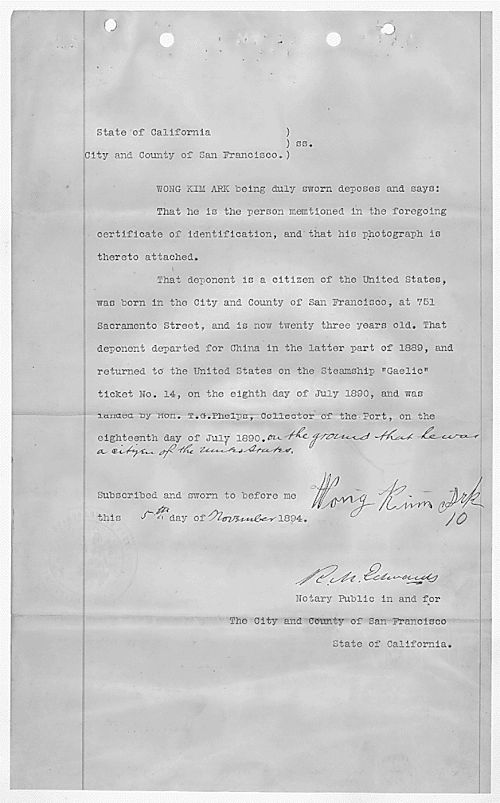
An old handwritten and printed statement with Wong Kim Ark’s signature.
A statement Wong Kim Ark signed in 1894, before the Supreme Court’s 1898 decision.
Wong Kim Ark’s sworn departure statement, November 5, 1894. National Archives, NAID 296480 / Wikimedia Commons; public domain.
Image source · Public domain (United States)

My source record. Identify the government officials’ action and the court’s different job. Explain that the court applied the Constitution; it did not grant him citizenship for the first time.

Sources for this card
Look and think

Show what you notice

  1. Who makes laws? Who carries them out? What do courts do?
  2. Why is blaming someone not the same as proof?

Answer your waypointact it outtell or dictatewrite

Grade 1 Science book, p. 63–65
In your book

Session 2, Investigate: Light carries a code

We can send light signals if we both know the code.

Imagine sending a message across a room without saying a word. You aim a flashlight at a white card below eye level. A patch of light appears, and your partner looks over. But does the receiver know what you want to say? Agree on a code, with one slow flash for ready and two for wait. A card can cover the light so you can pause between slow flashes. Bright room light or something in the way may hide your signal. A trial is a try. Seeing the light during a trial does not mean the message got through. In our test, we record the message the receiver understood before changing anything. What could help your next message get through?

Set up the test

Gather battery flashlight · opaque card · white target card · ready/wait response pictures · Week 20 sound record · paper

Safety Aim at a card below eye level, never faces. No rapid flashing or lasers. Use slow two-second signals; offer indirect viewing and stop for discomfort.

  1. Put a white card across the room. Aim the flashlight at it, below eye level.
  2. Agree: one slow light means ready, and two mean wait. Predict: can your receiver tell them apart?
  3. Send three mixed-up messages. Cover the light slowly between flashes. The receiver points to ready or wait.Adult: Record each result, then switch jobs.
  4. Change one thing, like where the card is. Test again. Compare with last week’s sound record.

Try the model

A model to try after your real test.

Getting the model ready…

Grade 1 Science book, p. 66Grade 2 Social Studies book, p. 82 and 84

Session 3: Record and make — Three jobs, two countries

Three jobs, two countries

Make a board that shows the three jobs of government. Then add your tested light code.

  1. Draw three boxes: make laws, carry out laws, decide cases. Put Congress, the President and the courts in them.Adult: Optional extension for two countries: add Canada’s groups from answer 2 in the key.
  2. Add a card that says blaming is not proof. Show one fair step a court uses.
  3. Show your light-code result and last week’s sound result. Mark any you did not test “not yet.”

Connect the ideas. Some messages are for all the people. Why might they need more than one way to reach them?

Look closely

Tap a picture to make it big. Zoom in and find the clues.

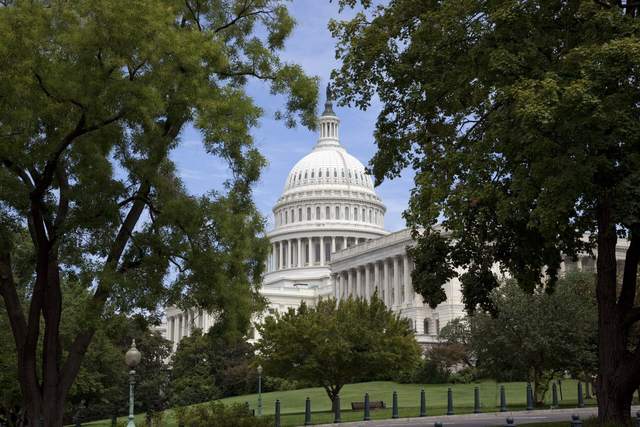
PhotographU.S. Capitol, Washington, D.C., 2010Carol M. Highsmith · Public domain
PhotographWhite House, Washington, D.C., 2024Katie Ricks, Official White House Photo · Public domain
PhotographSupreme Court Building, Washington, D.C.Carol M. Highsmith · Public domain
PhotographCape Hatteras Lighthouse, North CarolinaCarol M. Highsmith · Public domain

Watch and wonder

Field trip

Visit with a grown-up. These open other websites in a new tab.

Grade 1 Science book, p. 67Grade 2 Social Studies book, p. 83

My evidence page: Government jobs and a clear message

Show the three jobs of government. Use pictures, or labels you say out loud. Show your light code and a real result.

  • 1Three jobs of government
  • 2Light and sound evidence

3Choose and explain · Checkpoint game

Listen, then choose. Finish the game to earn this week’s stamp.

The game needs JavaScript turned on.

For the adult · what each grade shows

Grade 1

Show the three jobs of government, and show a light message and a sound message across a distance.

Grade 2

Explain why a court must hear evidence before it decides someone is guilty.

Showing the Grade 1 line for your book.

Showing the Grade 2 line for your book.

Take a photo of the evidence page or the test. Add your child’s own words. It stays on this device.

Add to my portfolio

Parent corner

How to run this week, in a few minutes.

At a glance

Time

From the workbook: Read and notice about 20 min · Investigate 20–30 min, plus short checks · Record and make 20–30 min.

Core

Name the three jobs of government (make laws, carry out laws, decide cases), and send a coded light message.

Materials
  • battery flashlight
  • opaque card
  • white target card
  • ready/wait response pictures
  • Week 20 sound record
  • paper
Safety

Aim at a card below eye level, never faces. No rapid flashing or lasers. Use slow two-second signals; offer indirect viewing and stop for discomfort.

Short week

Read paragraphs 1–4, then do Investigate steps 1–3 and the evidence page. If you skip the United States–Canada comparison board and both-country government/law explanations, note it as “not yet” for your teacher.

Next week

This is simplified civic education, not legal guidance or advice for anyone’s legal problem. Avoid sentencing role-play or predicting outcomes in real cases; national and local systems have important additional details.

Library books

  • If I Ran for President by Catherine Stier. Explains the jobs and steps involved in leading the U.S. government (covers the presidency only).
  • Samuel Morse, That's Who!: The Story of the Telegraph and Morse Code by Tracy Nelson Maurer. Tells how Morse code sent messages as signals.
Answer key (for grown-ups)

Talk together

  1. Who makes laws? Who carries them out? What do courts do?
    Lawmakers pass laws, the executive carries them out, and courts interpret and apply them. Police do not alone decide criminal guilt or a sentence.
  2. Why is blaming someone not the same as proof?
    An accusation is a claim. A court must hear evidence and follow fair steps set by law, and the accused may answer with a lawyer, before guilt is decided. Optional extension (Canada, target 2.3): Canada divides the same functions. Its Parliament has the House of Commons, the Senate and the Crown; a federal bill passes both houses and then receives royal assent. The prime minister, ministers and public service carry out laws, and independent courts interpret and apply them.

What to expect in the investigation

Slow coded light can communicate across a room. Glare, obstacles, and ambient light affect results. A brighter signal is not automatically more accessible. Count understood messages, not merely visible light. Something in the way can also block the signal. Record what the receiver got, then improve the setup.

Checkpoint question

An accusation alone is not proof. Reteach with the difference between a claim and evidence, without staging accusations against children.

Kindergarten this weekSocial Studies: The United States flagScience: Find shade