

Session 1, Read and notice: Water crosses boundaries
Week 22 big question: How can groups share what they find and make a plan better?
Start with a story (optional) Decision — Read it hereSupporting match · When the village tap runs dry, neighbors meet and decide to work together.
Lakes, fish and boats cross the lines on maps.
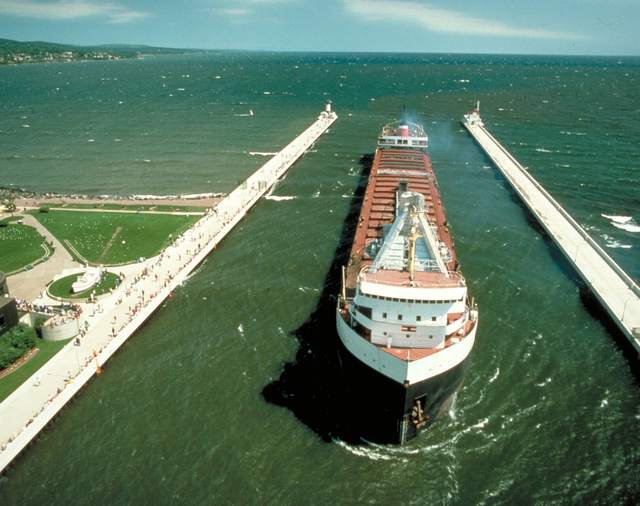
Imagine steering a boat across a border on the Great Lakes. No line on the water tells you to stop there. Lakes Superior, Michigan, Huron, Erie and Ontario form one connected water system. The United States and Canada share this region. Lake Michigan is all in the United States. Fish and pollution can cross the border too.
Two countries signed a plan to care for the lakes.
So how can two countries care for water they both share? In 1972, the United States and Canada signed a plan. It was a plan to care for the lakes. Its name was the Great Lakes Water Quality Agreement. Both countries agreed to cooperate. They would protect the lakes and make the water healthy again. Since then, they have updated the agreement. They have shared research, goals and work to cut pollution. The International Joint Commission checks progress, studies problems and listens to the public.
Many people work on it, and they check if it helps.
But a signed paper cannot clean a lake on its own. Scientists and people in towns join many governments in this work. These include national, state, provincial, local and Indigenous governments. Though groups may disagree about what comes first, they all need healthy water. They share what they observe, talk about it, then act and check the results. An agreement starts the work, but checking shows whether it helps. Your family can try those steps when you share a problem.
Show what you notice
- Why does more than one country need to care for the lakes?
- What could a group check to see if its agreement is working?
Answer your waypointact it outtell or dictatewrite