Story time optional

Picture books you can read together on this site.

From the library

Free with a library card. Availability varies.

Me on the Mapby Joan SweeneyBorrow in LibbySun! One in a Billionby Stacy McAnultyBorrow in Libby

Standards this week

The same codes and I Can statements as the printed books.

Books by grade

Grade 1

  • 1.2I can distinguish exact and relative locations.
  • 1-ESS1-1I can use repeated Sun Moon and star observations to make a prediction.
  • 1-ESS1-2I can record and compare daylight at different times of year.

Grade 2

  • 2.2I can distinguish exact and relative locations.
  • 2.2.1I can locate community places and geographic features on a simple map.

Science

Not in the Grade 2 Science book this week.

Grade 1 Social Studies book, p. 14–15Grade 2 Social Studies book, p. 12–13
In your book

Session 1, Read and notice: One place with many locations

Week 1 big question: How could someone find our learning place?

Start with a story (optional) Who's on Divya's Map? — Read it hereDivya draws a map with landmarks so her cousin Ravi can find his way.

An address names one exact place.

Imagine using only “Near a tree” to tell where a letter goes. With so many trees, how will the letter carrier find the place? An address helps by giving an absolute location, an exact named or numbered place. A square on a labeled map grid names an exact spot, too. To try an address while keeping your home private, use a made-up one.

Relative location tells where a place is from a known place.

Now your friend wants to find the library near the park. You explain that the library is across the street from the park. This relative location compares one place with another, giving your friend a clue. An address helps the driver find the right library along the way. Then the tall oak beside the door helps your friend find it.

Our place is inside bigger and bigger places.

Your learning place fits inside bigger places, which different maps can show. Is your community in California? Then it belongs to a state in the United States. That country is in North America, a continent on Earth. A community map shows nearby details, while a world map shows more of Earth. Your place is there, whichever map you use.

Look and think

Show what you notice

  1. How is an address not the same as “beside the park”?
  2. Which map would help you find a library near you? Why?

Answer your waypointact it outtell or dictatewrite

Grade 1 Science book, p. 12–14
In your book

Session 2, Investigate: A sky worth noticing

Day, night, and the Moon change in patterns.

Have you ever spotted the Moon while the sky was still light? It can show up by day as well as at night. Watch across many nights, and its shape seems to change. You can compare each observation, something you notice and record, by adding a date.

Day and night make a pattern because they repeat over and over. As Earth spins, the Sun seems to cross the sky. Watch its light and shadows, but never look at the Sun. When darkness comes, many stars are easier to see, too. Our sky drawings keep a dated record so we can compare these changes. What might you notice when the sky grows dark?

Set up the test

Gather paper and pencil · clock · appendix maps and daylight log · safe window view

Safety Never look directly at the Sun, even through a camera or binoculars. Observe daylight from a safe window; an adult supervises any evening observation.

  1. Pick a safe window. Guess: will the sky be light or dark at breakfast? After supper?
  2. For three days, look at the same two times. Draw the sky. Write the date.Adult: Clouds do not mean night. Note clouds separately.
  3. If it is safe, draw the Moon or stars. Never look near the Sun.
  4. Look at your three days. Tell one pattern. Use two dated observations to predict tomorrow’s sky.Adult: Start the daylight record with local sunrise and sunset times and their source.

Try the model

A model to try after your real test.

Getting the model ready…

Grade 1 Social Studies book, p. 16 and 18Grade 1 Science book, p. 15Grade 2 Social Studies book, p. 14 and 17

Session 3: Record and make — A location card for our sky station

My observations · A sky worth noticing

1Day 1
2Day 2
3Day 3

One pattern I noticed

Keep three dated sky checks on the sky record, p. 235, and start the daylight record, p. 234.

Fill this in on your workbook page.

A location card for our sky station

Make a card that helps someone find your safe place to watch the sky. This card is a map. It does not share your home address. You can point, move paper pieces, draw, tell, or write.

  1. Draw your room. Show a door, a window, and your sky spot. Label rows A and B and columns 1 and 2. Put a star in one square.
  2. Name the star’s square. Then tell where it is next to the door or window. Which clue names an exact square?
  3. Find California and the United States on the atlas maps (p. 222). Add one dated sky drawing to your card.Adult: Help the child find your community on the California map.

Connect the ideas. Why write the place and the date? How do they help someone use your sky record?

Look closely

Tap a picture to make it big. Zoom in and find the clues.

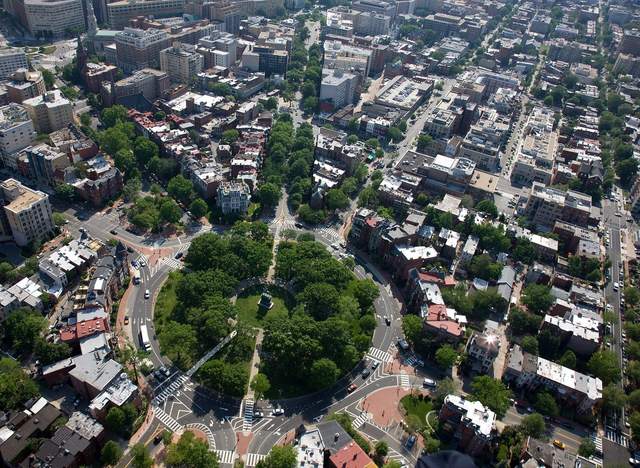
PhotographLogan Circle from the air, Washington, D.C., 2008Carol M. Highsmith · Public domain
PhotographRural mailboxes, Kitsap County, Washington, 2014Lumpytrout · CC BY-SA 4.0
PhotographThe Moon in a daytime sky, 2014bigwavephoto · CC BY-SA 4.0

Watch and wonder

Field trip

Visit with a grown-up. These open other websites in a new tab.

Grade 1 Social Studies book, p. 17Grade 1 Science book, p. 16Grade 2 Social Studies book, p. 15

My evidence page: Here is my observing place

Show your map and one dated observation. Point, draw, dictate, or write an exact location and a relative location.

  • 1My map and two location clues
  • 2My dated observation and prediction

3Choose and explain · Checkpoint game

Listen, then choose. Finish the game to earn this week’s stamp.

The game needs JavaScript turned on.

For the adult · what each grade shows

Grade 1

Point to or name an exact map square and a relative location. Draw one sky observation and tell a simple prediction.

Grade 2

Explain how an exact location and a relative location are different, using your map.

Showing the Grade 1 line for your book.

Showing the Grade 2 line for your book.

Take a photo of the evidence page or the test. Add your child’s own words. It stays on this device.

Add to my portfolio

Parent corner

How to run this week, in a few minutes.

At a glance

Time

From the workbook: Read and notice about 20 min · Investigate 20–30 min, plus short checks · Record and make 20–30 min.

Core

Give an exact and a relative location, and start three days of dated sky checks.

Materials
  • paper and pencil
  • clock
  • appendix maps and daylight log
  • safe window view
Safety

Never look directly at the Sun, even through a camera or binoculars. Observe daylight from a safe window; an adult supervises any evening observation.

Short week

Read together, then do Investigate steps 1–2 and the evidence page. If you skip actual community-feature location, note it as “not yet” for your teacher.

Next week

Record local sunrise, sunset, and daylight duration at the suggested checkpoints (Weeks 1, 6, 12, 18, 23, 30 and 36) using one consistent source. Adults calculate duration; children compare it. Keep missing entries blank rather than inventing observations.

Library books

  • Me on the Map by Joan Sweeney. A child sees her room, home, town and country as places on a map.
  • Sun! One in a Billion by Stacy McAnulty. The Sun introduces itself as the star that lights our sky.
Answer key (for grown-ups)

Talk together

  1. How is an address not the same as “beside the park”?
    An address identifies a particular place; “beside” compares places. A labeled grid gives an exact location within this classroom map, not a worldwide coordinate.
  2. Which map would help you find a library near you? Why?
    Choose the community map because it shows local streets and buildings. Verify the actual community location privately; outside California, identify both the home state and California.

What to expect in the investigation

Expect repeating light and dark periods, with visibility affected by clouds and buildings. The Moon may be absent from these observations. Do not infer absence from Earth. A few days start, but do not complete, seasonal daylight evidence.

Checkpoint question

Choice B is relative because it compares the place with the window. If confused, move a toy while keeping the labeled grid fixed.

Kindergarten this weekSocial Studies: Rules help usScience: Scientists look closely