Story time optional

Picture books you can read together on this site.

From the library

Free with a library card. Availability varies.

Before We Eat: From Farm to Tableby Pat BrissonBorrow in LibbyGrandfather Tang's Storyby Ann TompertBorrow in Libby

Standards this week

The same codes and I Can statements as the printed books.

Books by grade

Grade 1

Social Studies

Not in the Grade 1 Social Studies book this week.

Science

Not in the Grade 1 Science book this week.

Grade 2

  • 2.4.1I can trace food production and the roles of farmers, processors, distributors, weather, land and water.
  • 2-PSI-3I can take apart an object, reuse its pieces and record the new construction.
Grade 2 Social Studies book, p. 63–64
In your book

Session 1, Read and notice: Many routes to a meal

Week 15 big question: What journeys can our food take?

Start with a story (optional) Ammachi's Amazing Machines — Read it hereSooraj and his grandma use simple machines to make coconut barfi.

Food can take more than one path to get to us.

Pick an apple from a tree in your mind. Where could it go next: a farm stand or a jar of applesauce? A grower might sell it at a stand near the farm. But other apples go to workers who wash, sort and pack them. Some workers make applesauce, changing the apples into another food. This processing gets food ready for people to use. The processor doing that work may be a small local business. It could also be a big company.

Trucks and people move food to where we eat it.

Next, a distributor helps move food toward the people who use it. That might mean sending boxes by truck to a shop. But a school kitchen might get fruit from a nearby farm instead. At home, garden tomatoes may travel just a few steps to the kitchen. Food takes different routes, so not every meal comes from a supermarket.

Land, rain and the right weather help food grow.

Before any of those trips, the apple had to grow. Farmers work with living things that need land, water and the right weather. Too little rain makes growing hard, while too much water can harm a crop. Once food grows, workers choose, store, prepare and serve it along its way. Think about a food on your plate: what do you know about its path? Your food map can have a question mark waiting for an answer.

Grade 2 · Source card

Farmers and food journeys

Keisaburo Koda, a Japanese American farmer, and his family grew rice and ran a rice mill in California. A mill helps get rice ready to eat. Didar Singh Bains, a Punjabi Sikh farmer, grew peaches near Yuba City. These farmers helped food move from fields toward people’s tables. Choose rice or peaches. Show the grower first. Then add only steps you can support with a source.

My source record. Trace a sourced path from producer through processing and distribution toward a buyer. Mark any unknown step instead of inventing a route.

Sources for this card
Look and think

Show what you notice

  1. How could two apples take different paths to a meal? How do land, water and weather help?
  2. What does a processor do? What does a distributor do?

Answer your waypointact it outtell or dictatewrite

Grade 2 Science book, p. 69–71
In your book

Session 2, Investigate: The same pieces in a new shape

The same blocks can be built into a new shape.

Your block stall is gone, but are any blocks missing? When a pretend food stall comes apart, its blocks are still there. Those same pieces are ready to become a new cart or a new bridge. As you put the pieces in different places, you change their arrangement. Their new shape can give them a new job, too. Yet the set of pieces stays the same if none are added or lost. Count before and after you rebuild your model. Check that you have kept the same pieces. With the same set of pieces, what shape could you make next?

Set up the test

Gather eight large blocks or reusable building pieces · paper · drawing tools · optional familiar food label

Safety Use pieces too large to swallow. Keep structures low; do not dismantle appliances or real furniture.

  1. Count eight building pieces together. Use all eight to build a food stall or a shelter.
  2. Draw or photograph your build. Predict: can the same pieces make a new shape with a new job?
  3. Take it apart and count. Build all eight into a cart or a bridge. Do not add or take away any.
  4. Count again. Tell what changed and what stayed the same.Adult: Write down the child’s sentence about what changed and what stayed the same.

Try the model

A model to try after your real test.

Getting the model ready…

Grade 2 Social Studies book, p. 65Grade 2 Science book, p. 72

Session 3: Record and make — Map a food journey

Map a food journey

Show the path one food takes to get to you. If you don’t know it, use the apple path and say it is an example.

  1. Draw a route: farm, processor, distributor, place to eat. Add land, water and weather by the farm.
  2. Show your first build and your new build, each next to its job. Keep the piece counts with them.
  3. Tell how you eat this food. Put a question mark on anything you can’t check.

Connect the ideas. Which parts of your model show real food work? Which parts are just pretend?

Look closely

Tap a picture to make it big. Zoom in and find the clues.

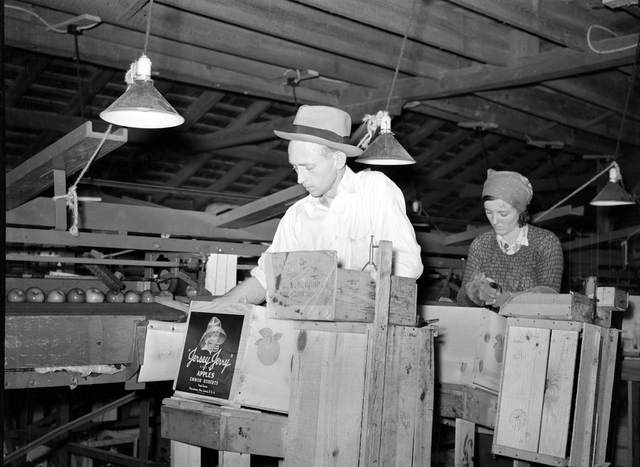
Primary source · photographPacking apples on a fruit farm, New Jersey, 1938. Look closely: what are the boxes for?Arthur Rothstein · Public domain

Watch and wonder

Field trip

Visit with a grown-up. These open other websites in a new tab.

Grade 2 Social Studies book, p. 66

My evidence page: A journey and a rebuilding

Draw the food route with arrows. Then tell what changed and what stayed the same in your two builds.

  • 1Food route and resources
  • 2What changed and what stayed the same

3Choose and explain · Checkpoint game

Listen, then choose. Finish the game to earn this week’s stamp.

The game needs JavaScript turned on.

For the adult · what each grade shows

Grade 1

Show a food route in order, and show the same eight pieces in two builds.

Grade 2

Explain the job of each worker, and of land, water and weather, on your food route.

Showing the Grade 1 line for your book.

Showing the Grade 2 line for your book.

Take a photo of the evidence page or the test. Add your child’s own words. It stays on this device.

Add to my portfolio

Parent corner

How to run this week, in a few minutes.

At a glance

Time

From the workbook: Read and notice about 20 min · Investigate 20–30 min, plus short checks · Record and make 20–30 min.

Core

Trace one food route, and show the same pieces in two builds.

Materials
  • eight large blocks or reusable building pieces
  • paper
  • drawing tools
  • optional familiar food label
Safety

Use pieces too large to swallow. Keep structures low; do not dismantle appliances or real furniture.

Short week

Read paragraphs 1–2, then do the Investigate steps and project step 1.

Next week

Compare an actual package label with the possible route. A packing address does not necessarily identify the farm.

Library books

  • Before We Eat: From Farm to Table by Pat Brisson. Shows the many people who bring food from farm to table.
  • Grandfather Tang's Story by Ann Tompert. A story told with tangram pieces that are rearranged into new shapes.
Answer key (for grown-ups)

Talk together

  1. How could two apples take different paths to a meal? How do land, water and weather help?
    One apple could go from grower to eater; another could be washed, processed into sauce, distributed, and sold. Both routes are plausible examples, not traced purchases. Land provides space and growing conditions, water supports growth, and weather affects growing conditions.
  2. What does a processor do? What does a distributor do?
    Processors prepare food, such as washing apples or making sauce; distributors move it to stores. Farmers grow it.

What to expect in the investigation

Both models should contain eight pieces if none were added or removed. Shape and purpose can differ. A lost piece changes the set; recount rather than claiming conservation without evidence. Drawing both structures helps compare their shapes. The second object may have a different job. A block cart is a model, not a real truck, but it shows how parts are rearranged.

Checkpoint question

The set of pieces can stay the same. Invite the child to match individual pieces across drawings if the distinction is unclear.

Kindergarten this weekSocial Studies: Places and jobs near usScience: Push from different sides