Story time optional

Picture books you can read together on this site.

From the library

Free with a library card. Availability varies.

Martin's Big Words: The Life of Dr. Martin Luther King, Jr.by Doreen RappaportBorrow in LibbyBorrow in HooplaThe Moon Seems to Changeby Franklyn M. BranleyBorrow in LibbyBorrow in Hoopla

Standards this week

The same codes and I Can statements as the printed books.

Books by grade

Grade 1

  • 1.3I can explain the meaning of United States symbols, icons and traditions.
  • 1.3.1I can recite the Pledge and sing patriotic songs, or document a teacher agreed alternative.
  • 1.3.2I can explain the significance of several national holidays.
  • 1-ESS1-1I can use repeated Sun Moon and star observations to make a prediction.

Grade 2

Social Studies

Not in the Grade 2 Social Studies book this week.

Science

Not in the Grade 2 Science book this week.

Grade 1 Social Studies book, p. 86–87
In your book

Session 1, Read and notice: More than a day off

Week 24 big question: How do we mark big days and spot patterns?

Start with a story (optional) Tala’s Three Days and Three Guesses — Read it hereTala plans holidays and a star picnic with Grandma, using her sky records.

July 4 marks the Declaration of Independence in 1776.

Picture July 4 marked on a calendar. What happened on that date? On national holidays, people may learn, celebrate or help others. Some days commemorate an event, which means to remember and honor it. Independence Day, July 4, marks the adoption of the Declaration of Independence in 1776. The Constitution came later, so July 4 does not mark its writing.

Juneteenth honors freedom. MLK Day honors equal rights.

Juneteenth marks freedom and the long work for equal rights. Freedom was announced and enforced for enslaved people in Galveston, Texas. This happened on June 19, 1865. Freedom did not come everywhere at once, so people learn as well as celebrate. Martin Luther King Jr. Day honors a leader who worked for equal rights. He fought unfair treatment because of race. Many people honor him by serving others that day.

Memorial Day and Veterans Day are linked, but not the same.

For someone grieving, a quiet day of remembering may mean the most. Memorial Day remembers those who died serving in the United States armed forces. Veterans Day honors people who have served in those forces. So the days honor service in different ways.

Not all people take part in a tradition the same way.

You may hear people say the Pledge of Allegiance or sing patriotic songs. The Pledge is a promise to be loyal to the United States. The songs share ideas about the country. Both are part of a tradition, something a group does again and again. Learning their words helps us know what people mean. Families have their own beliefs and take part in different ways. When you hear a tradition, there is room to listen and learn.

Sources for this reading
Look and think

Show what you notice

  1. Pick two holidays. How are their reasons not the same?
  2. Do all families mark a holiday the same way? Why should we not think so?

Answer your waypointact it outtell or dictatewrite

Grade 1 Science book, p. 77–79
In your book

Session 2, Investigate: The sky has patterns

The sky has a pattern, so we can make a prediction.

Your shadow points one way, then another, without taking a step. What makes it turn as the hours of the day pass? Earth turns, so the Sun and stars seem to cross the sky. As the Sun seems to move, sunlight makes shadows point away from it. With an adult, watch shadows safely without looking at the Sun itself. You might spot the Moon in a blue daytime sky too. Its shape repeats about every month. This pattern helps us make a prediction about what comes next. Our Moon records show a round Moon on Day 1. It is nearly round on Days 30 and 60. The prediction tells what we expect, while a record tells what we saw. Clouds may hide the sky, but try looking another day.

Set up the test

Gather paper · drawing tools · earlier safe sky records · adult-supervised window or outdoor view

Safety Never look at the Sun or use binoculars near it. Observe shadows instead. Adults supervise evening observations. Indoor records are an alternative when weather or access prevents viewing.

  1. Read the made-up practice records. Find what repeats for shadows, stars and the Moon.
  2. Predict three things: the Day 3 morning shadow, the stars later that night, and the next round Moon.
  3. With an adult, look at shadows at two times of day. Never look at the Sun.Adult: If you like, also look at the Moon or a star group twice from the same spot.
  4. Compare what you saw with your predictions. Mark any you could not check, like on cloudy days.

Try the model

A model to try after your real test.

Getting the model ready…

Grade 1 Social Studies book, p. 88Grade 1 Science book, p. 80 and 82

Session 3: Record and make — A calendar with two kinds of notes

My observations · The sky has patterns

1Shadow: date and time 1
2Shadow: date and time 2
3Moon or stars, if I could look

Did it match my prediction?

Keep your shadow and Moon checks on the sky record, p. 235.

Fill this in on your workbook page.

A calendar with two kinds of notes

Make a calendar for big days and the sky. People pick the big days, but the sky’s pattern comes from nature.

  1. Pick three holidays from the reading. Tell why each one matters. How are Memorial Day and Veterans Day different?
  2. With an adult, read the Pledge and a patriotic song. Talk about one phrase. Say or sing them if you choose.Adult: Find them on the “Words used in civic traditions” page in Reusable Records (p. 241). Record saying and singing apart from understanding.
  3. Add your predictions for the Sun, the stars and the Moon. Mark which ones you checked.

Connect the ideas. How does a calendar help us keep track of special days? How does it help us track what we see in the sky?

Look closely

Tap a picture to make it big. Zoom in and find the clues.

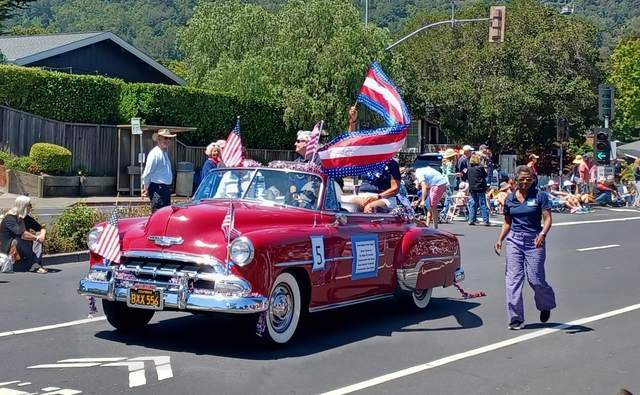
PhotographFourth of July parade, Corte Madera, CaliforniaMx. Granger · CC0

Watch and wonder

Field trip

Visit with a grown-up. These open other websites in a new tab.

Sources behind this trip and reading

Grade 1 Social Studies book, p. 89Grade 1 Science book, p. 81

My evidence page: Remembering and predicting

Tell what two holidays mean. In its own box, record the Pledge and the song: shown, not yet, or shown in a way you agreed on. Your sky checks stay on your record.

  • 1Holidays and their meanings
  • 2Pledge and song: shown, not yet, or shown another agreed way

3Choose and explain · Checkpoint game

Listen, then choose. Finish the game to earn this week’s stamp.

The game needs JavaScript turned on.

For the adult · what each grade shows

Grade 1

Show what two holidays mean and make sky predictions, and record the Pledge and the song separately or mark them pending.

Grade 2

Explain how a sky prediction is different from a sky observation, using your own evidence.

Showing the Grade 1 line for your book.

Showing the Grade 2 line for your book.

Take a photo of the evidence page or the test. Add your child’s own words. It stays on this device.

Add to my portfolio

Parent corner

How to run this week, in a few minutes.

At a glance

Time

From the workbook: Read and notice about 20 min · Investigate 20–30 min, plus short checks · Record and make 20–30 min.

Core

Tell what two holidays mean, and make and check sky predictions.

Materials
  • paper
  • drawing tools
  • earlier safe sky records
  • adult-supervised window or outdoor view
Safety

Never look at the Sun or use binoculars near it. Observe shadows instead. Adults supervise evening observations. Indoor records are an alternative when weather or access prevents viewing.

Short week

Read paragraphs 1–3, then do Investigate steps 1–3 and the evidence page.

Next week

No child is made to recite or sing. If your child declines or cannot take part, mark it “not yet” and agree with your CPA teacher on another way to show it. Do not simply swap in naming the symbols instead.

Library books

  • Martin's Big Words: The Life of Dr. Martin Luther King, Jr. by Doreen Rappaport. A picture-book biography that helps explain why we remember a holiday.
  • The Moon Seems to Change by Franklyn M. Branley. Explains the Moon's phase pattern.
Answer key (for grown-ups)

Talk together

  1. Pick two holidays. How are their reasons not the same?
    Accept any accurate comparison, especially Memorial Day for military deaths and Veterans Day for those who served. July 4 concerns the Declaration, not the Constitution.
  2. Do all families mark a holiday the same way? Why should we not think so?
    Beliefs, experiences, grief, and customs vary. Learning a holiday’s meaning does not establish that a child’s family observes it.

What to expect in the investigation

Practice predictions: Day 3 morning shadow generally west; the star group farther west later; another round Moon about Day 89–90. These are estimates, not exact forecasts. Real directions vary; clouds can prevent checking. Teaching records are not student observations. Sunlight makes shadows point away from the Sun, and the Moon’s shape repeats about every month. Clouds can hide the sky. Real directions and what the child sees depend on place, time and weather; keep predictions apart from observations.

Checkpoint question

The Moon sometimes appears in daylight. Revisit the reading if night-only remains a misconception.

Kindergarten this weekSocial Studies: Presidents and remembered daysScience: Two months of weather